Controlled Canopy Height
Keep large trees within safe boundaries relative to your home and power connections.
Canopy reduction and height management solutions that control overgrown trees safely and responsibly.
Providing canopy reduction across Mundingburra, Aitkenvale, Pimlico, and Townsville.
When searching for tree lopping Mundingburra, property owners typically want to reduce the height or spread of an overgrown tree. We deliver canopy reductions and selective pruning that achieve your space and safety goals without ruining the tree's health.
In Townsville's intense heat and sudden wet spells, trees subjected to crude topping cuts quickly develop fast-growing, weakly attached water shoots. These shoots fail easily during tropical cyclones, creating severe safety risks on Mundingburra properties.
Keep large trees within safe boundaries relative to your home and power connections.
Avoid weak, hazardous regrowth by using proper arboricultural reduction cuts instead of rough topping.
Open up your garden and living spaces while maintaining natural shade.
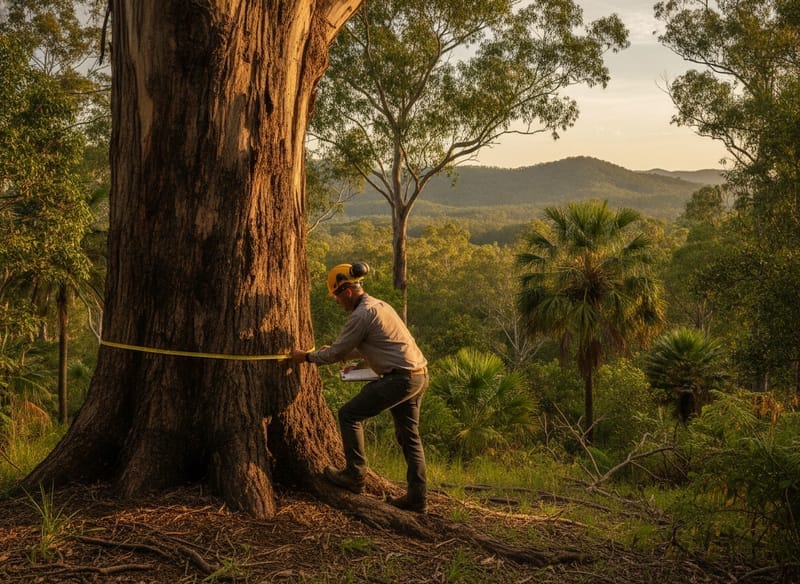
We assess the tree's species, structural soundness, and your canopy clearance goals.
We advise whether a crown reduction, lateral trim, or complete removal is the most practical and cost-effective approach.
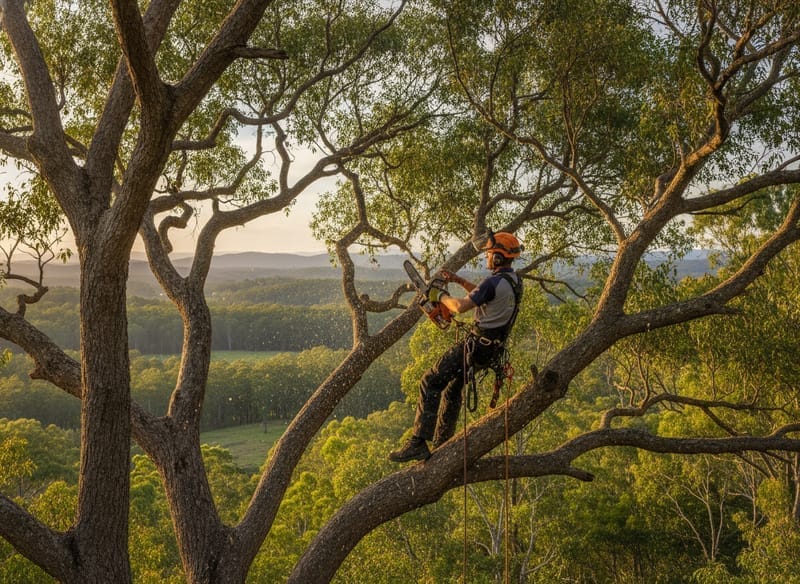
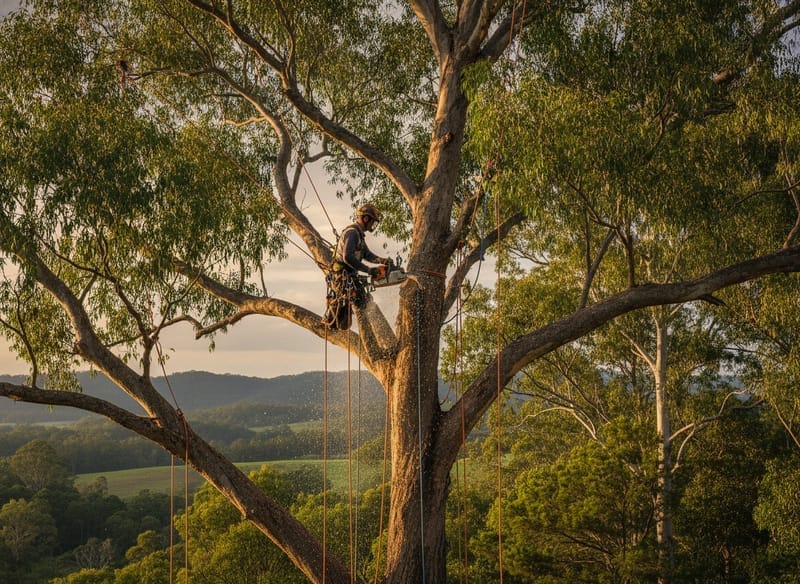
Our climbers carefully cut back overhanging branches to lateral growth points to maintain tree vitality.
All timber and foliage are chipped into mulch and the entire work area is cleared.
When residential and commercial property owners need professional Tree Lopping Mundingburra, our team at Townsville Arborist provides safe, targeted, and highly effective canopy management. Located right along the Ross River corridor, Mundingburra features a beautiful mix of established acreage-style blocks and leafy suburban streets, meaning large, mature trees are a central part of the local character.
However, living in Townsville's unforgiving dry tropics means those same trees are subjected to severe seasonal extremes. They endure intense drought stress for most of the year, only to be hammered by cyclonic winds and heavy monsoonal rain when the ground is saturated. When a tree outgrows its space, overhangs a roofline, or starts dropping heavy debris into your yard, property owners often ask us to simply "lop" it. We understand what you need—you want the tree smaller and safer. Our qualified arborists achieve this using modern, standard-compliant pruning techniques that reduce the size of your canopy without destroying the health of the tree or creating dangerous regrowth.
In the tree industry, "lopping" or "topping" refers to the outdated practice of indiscriminately hacking the top off a tree, leaving large, blunt stubs. While this might seem like a quick way to make a tree smaller, it is highly destructive and ultimately dangerous, especially in a cyclone-prone region like Townsville. When a tree is brutally lopped, it panics and pushes out rapid, desperate foliage known as epicormic regrowth. These new branches are not anchored deeply into the wood; they are weakly attached to the outer layers of the bark. When our wet season arrives and intense wind events like Cyclone Kirrily hit, these weak attachments are the first to snap, causing significant damage to homes, fences, and powerlines. Furthermore, large topping cuts struggle to heal, inviting rapid decay and termite hollowing right into the trunk. Our team solves this problem by replacing destructive lopping with AS4373-compliant canopy reduction. Instead of blunt-force topping, we perform targeted reduction cuts at proper branch collars. This naturally restricts the tree's height and spread while maintaining its structural integrity. You get the smaller, safer canopy you need, and the tree remains resilient enough to withstand the North Queensland storm season.
While customers frequently ask for tree lopping to make a tree smaller, our qualified climbing arborists employ specific, standard-compliant techniques to safely manage overgrown canopies. Here is how we reduce and refine your trees:
We selectively prune the upper and outer canopy back to appropriate growth points, safely reducing overall height and end-weight while preserving the tree's natural shape.
We remove the lower branches to create necessary vertical clearance over driveways, footpaths, roofs, and boundary fence lines without topping the tree.
We selectively remove secondary branches within the canopy to allow cyclonic winds and natural light to pass through, significantly reducing the sail area and uprooting risk.
We target specific, problematic limbs—such as those overhanging your gutters, rubbing on powerlines or shading solar panels—without altering the entire structure.
Following severe storm damage, we perform rapid, heavy reduction to stabilise a fractured or uprooting tree before a complete removal can be safely executed.
When you hire us to manage an oversized tree, we follow a strict, professional process to ensure the job is done safely and correctly on your property.
First, we conduct a comprehensive site assessment. Our team evaluates the tree's species, structural health, and access limitations on your Mundingburra block. We frequently deal with deep black cracking clays in this area that can heavily destabilise root plates during the wet season, so we check for signs of uprooting or termite hollowing before we ever put a climber in the canopy.
Next, we determine the appropriate reduction strategy. Under Australian Standards, we typically aim to remove no more than 25 to 30 percent of the live crown in a single event to avoid shocking the tree.
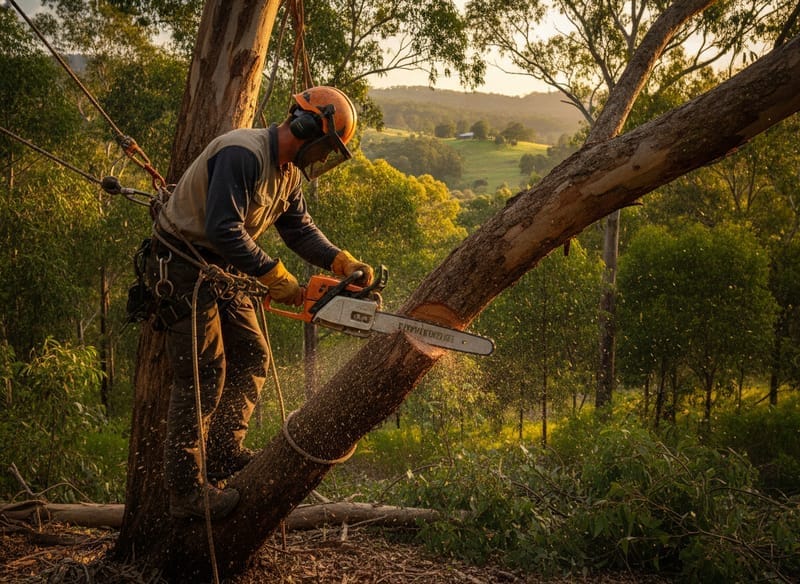
During execution, our AQF Level 3 climbing arborists use advanced rope-access techniques or Elevating Work Platforms (EWPs) to safely access the canopy. Using precision top-handle chainsaws like the MS201T, we make clean, targeted cuts.
Finally, we process all green waste efficiently. We run the branches through our heavy-duty 12-inch wood chippers, turning bulky limbs into useful mulch. Our tipper trucks remove the logs, and we perform a thorough site clean-up, leaving your yard immaculately tidy.
Every canopy reduction we undertake strictly adheres to AS4373 (Pruning of Amenity Trees). This ensures that all cuts are made to industry standards, protecting the long-term health and structural stability of your property's vegetation.
Our team consists of fully qualified AQF Level 3 climbing arborists and AQF Level 5 consulting arborists. We operate fully insured with comprehensive public liability and full WorkCover for our staff, protecting you from any financial risk. From using high-quality rigging gear and PPE to implementing formal traffic management plans on busy suburban streets, we prioritise safety at every stage of the operation.
If you are planning Tree Lopping Mundingburra, the good news is that Townsville City Council is highly accommodating for private property owners. Unlike southern states, there is no blanket tree preservation order and no permit scheme for routine tree work on standard private freehold land. The main exception under the Townsville City Plan is if your property falls within the very high importance area mapped on overlay OM-08 (Natural assets overlay code). Outside of that specific overlay, you have the freedom to manage your trees. Additionally, under the state Vegetation Management Act 1999, there is a standing exemption for clearing that addresses an imminent risk of serious personal injury or property damage. This is particularly relevant here, where fast-growing, structurally weak species like the African Mahogany and Yellow Flame Tree frequently cause infrastructure threats during our severe storm season. We can help you identify these hazards early and manage them compliantly.
After a significant canopy reduction, your tree needs time to recover. In our dry tropics climate, the best post-care is deep, infrequent watering to support the root system, especially during the brutally dry months leading up to November. Do not apply high-nitrogen fertilisers after the work, as this can force the tree to push out weak, rapid foliage before it has properly compartmentalised the pruning wounds. Keep an eye on the canopy for any signs of heavy epicormic regrowth over the next wet season. We generally recommend scheduling a follow-up assessment with our arborists every two to three years.
Canopy reduction and lopping alternative costs in Mundingburra depend on tree size, access, and required foliage reduction.
We supply fixed, itemised quotes detailing all canopy reduction work before we begin.
We provide canopy management across Mundingburra and neighbouring Townsville districts.
Get safe, effective canopy reduction from qualified local arborists.
Get a Free Quote